


California Solar Company: Independent Solar Broker Serving the Golden State
Your Trusted California Solar Company Alternative
California pioneered America's solar revolution and remains the nation's undisputed solar leader. With 300+ days of sunshine, high electricity rates from PG&E, SCE, and SDG&E, and aggressive clean energy mandates, California homeowners and businesses can achieve exceptional solar ROI—despite recent changes to net metering (NEM 3.0). But California's crowded solar market is filled with aggressive salespeople pushing high-pressure deals, overpriced equipment, and confusing financing structures.
That's where Girdler Solar makes all the difference. As an independent California solar broker, we don't work for any specific solar installer—we work for you. We compare multiple vetted solar providers across California, help you navigate NEM 3.0 and optimal system sizing with battery storage, and negotiate competitive pricing on your behalf. From Los Angeles to San Francisco, San Diego to Sacramento, we're your trusted solar advisor in California—delivering honest guidance, transparent comparisons, and real savings without the hard sell that dominates the California solar market.
Why California Residents Choose Our Solar Company Over Big Installers

Exceptional Solar Resources
California is blessed with some of the best solar conditions on Earth. Southern California receives 5.5-6.0 peak sun hours daily, while even foggy San Francisco gets 4.5-5.0 peak sun hours. This abundant sunshine means California solar systems produce 25-40% more electricity than identical systems in cloudier states, dramatically improving ROI and making solar one of the smartest investments California property owners can make.
High and Rising Electricity Rates
California residents pay among the highest electricity rates in the continental United States. PG&E customers in Northern California pay $0.35-0.45/kWh, Southern California Edison customers pay $0.30-0.40/kWh, and SDG&E customers in San Diego face rates as high as $0.50-0.60/kWh during peak hours. These rates continue climbing year after year, with further increases guaranteed as utilities upgrade aging infrastructure. Solar panels eliminate exposure to these escalating costs and lock in predictable, low-cost electricity for 25-30 years.
NEM 3.0 Makes Battery Storage Essential
California's new Net Energy Metering 3.0 policy (NEM 3.0), implemented in April 2023, significantly reduced the credit homeowners receive for excess solar sent to the grid—from full retail rates to roughly $0.05-0.08/kWh. This makes exporting solar to the grid far less valuable than storing it in batteries for use during expensive evening hours. While NEM 3.0 changed the economics, solar paired with battery storage remains highly profitable in California, delivering 8-12 year payback periods and $40,000-$80,000 in lifetime savings.
Strong Financial Incentives
California solar still benefits from excellent incentives:
-
30% Federal Solar Tax Credit (ITC): Deduct 30% of total system cost (panels + batteries) from federal taxes through 2032
-
SGIP (Self-Generation Incentive Program): Battery storage rebates ranging from $200-$1,000/kWh depending on income and location
-
Local Utility Rebates: Many California utilities offer additional solar and battery incentives
-
Property Tax Exemption: Solar installations don't increase property tax assessments
-
Sales Tax Exemption: No sales tax on solar equipment in California
Energy Independence & Resilience
California's power grid faces increasing strain from wildfires, Public Safety Power Shutoffs (PSPS), heat waves, and aging infrastructure. Solar panels paired with battery storage provide true energy independence—keeping your home powered during grid outages, PSPS events, and emergencies. For California families, energy resilience isn't a luxury; it's increasingly a necessity.
Environmental Leadership
California leads the nation in climate action, with mandates requiring all new homes to include solar panels and aggressive goals for 100% clean electricity by 2045. Solar installations help California meet these targets while dramatically reducing your carbon footprint and supporting the state's clean energy transition.
Unlike Traditional California Solar Companies, We Work for You
Traditional California solar companies employ aggressive, commissioned sales teams who can only present their company's equipment, financing, and pricing. They can't show you competitive options or better deals because they're locked into one installer and one price structure. California's crowded solar market is notorious for high-pressure sales tactics, inflated pricing, and buyer's remorse. As an independent California solar broker, Girdler Solar changes the equation:
Better Pricing: We negotiate with multiple California installers to secure competitive rates you wouldn't get going directly to a single company—often saving $3,000-$8,000 compared to initial quotes
Premium Equipment Access: Choose from top-tier panels (SunPower, REC, Q CELLS, Canadian Solar), inverters (Enphase, SolarEdge, Tesla), and batteries (Tesla Powerwall 3, Enphase IQ Battery, LG)
NEM 3.0 Optimization: We design systems specifically for California's new net metering rules, properly sizing battery storage to maximize savings
Honest Comparisons: Side-by-side analysis of costs, warranties, production estimates, and 25-year financial projections
No Sales Pressure: We educate you about your options and let you decide on your timeline—no same-day pressure, no limited-time gimmicks

California Solar Company Expertise: NEM 3.0, SGIP & Golden State Requirements
-
NEM 3.0 Navigation: Understanding how California's new net metering rules affect system sizing, battery requirements, and financial projections
-
Utility-Specific Rate Structures: Optimizing designs for PG&E's time-of-use rates vs. SCE's tiered rates vs. SDG&E's super-peak pricing
-
PSPS Preparedness: Designing battery backup systems sized for multi-day power shutoffs common in wildfire-prone areas
-
Fire-Hardening Requirements: Meeting California's solar installation requirements in high fire-risk zones
-
HOA & City Regulations: Navigating California's Solar Rights Act while working within local municipal codes
-
Title 24 Compliance: Understanding California's solar mandate for new construction and major renovations
-
SGIP Rebate Maximization: Securing maximum battery storage incentives through California's Self-Generation Incentive Program
We understand these California-specific nuances and design systems optimized for the Golden State's regulations, utility requirements, and climate conditions.
How Our California Solar Company Delivers Transparent NEM 3.0 Solutions
-
Here's how working with Girdler Solar works:
-
Free Consultation: We review your electricity usage, analyze your utility bills, assess your property, and discuss your solar and battery storage goals
-
NEM 3.0 Analysis: We calculate optimal system sizing and battery capacity based on California's new net metering rules
-
Custom System Design: We create a design optimized for your roof orientation, shading, California climate, and utility's rate structure
-
Provider Comparison: We request competitive quotes from multiple California solar installers
-
Clear Financial Analysis: We present side-by-side comparisons showing upfront costs, SGIP rebates, federal tax credit, utility savings, and 25-year projections
-
Your Decision: You choose the best option with complete confidence—no pressure, no gimmicks
-
Installation Coordination: We manage permitting, utility interconnection, SGIP applications, and installation scheduling
California Solar Company Pricing: What to Expect Under NEM 3.0
California Solar Company Costs: Solar + Battery Systems
The average California residential solar + battery system costs $25,000-$45,000 before incentives, depending on system size, battery capacity, and equipment quality. California solar costs are higher than the national average due to:
-
High labor costs in California markets
-
NEM 3.0 requiring battery storage for optimal economics
-
Premium equipment rated for California heat and seismic requirements
-
Complex permitting in many California jurisdictions
After applying the 30% federal tax credit and SGIP battery rebates, net cost typically ranges from $15,000-$30,000.
For a typical California home using 800-1,200 kWh/month, a 7-10 kW solar system paired with 10-15 kWh of battery storage usually offsets 80-100% of electricity consumption. At current PG&E/SCE/SDG&E rates ($0.30-0.50/kWh), California homeowners save $2,500-$4,500 annually.
Understanding NEM 3.0's Impact
Under California's new net metering rules (NEM 3.0):
-
Export credits are low: Excess solar sent to the grid is credited at $0.05-0.08/kWh (not retail rates)
-
Self-consumption is key: Using your solar power directly saves $0.30-0.50/kWh
-
Batteries maximize value: Storing daytime solar for evening use delivers far better economics than exporting to grid
Example NEM 3.0 System: A 9 kW solar system with 13.5 kWh Tesla Powerwall 3 in Orange County:
-
Solar produces 13,500 kWh annually
-
Battery stores 4,000 kWh for evening use
-
Household directly uses 7,000 kWh during day
-
Only 2,500 kWh exported to grid at low rates
Result: 85% self-consumption rate maximizing savings despite NEM 3.0.
Total California Solar Savings
Typical 25-year savings for California homeowners with solar + battery:
-
Electricity savings: $60,000-$100,000
-
Federal tax credit: $7,500-$13,500
-
SGIP rebate (battery): $2,000-$10,000
-
Avoided PSPS generator costs: $5,000-$10,000
-
Total 25-year benefit: $75,000-$130,000
Net of system cost, California homeowners typically realize $40,000-$80,000 in net profit over 25 years.
Financing Options
Cash Purchase: Best long-term value, fastest payback, full incentive benefits
-
Solar Loan: $0 down, immediate savings, system ownership, claim all incentives
-
Solar Lease/PPA: Low upfront cost, but you forfeit the 30% tax credit and SGIP rebates—significantly worse economics under NEM 3.0
We help you compare these options based on your financial situation and goals.
Payback Period
-
California solar + battery systems under NEM 3.0 typically pay for themselves in 8-12 years. After payback, you're generating free electricity for the remaining 13-17 years of your system's 25-30 year lifespan. Payback is faster for:
-
SDG&E customers (highest rates)
-
High electricity users (>1,200 kWh/month)
-
Homes with time-of-use rates and high peak usage
-
Properties in PSPS zones avoiding generator costs
Commercial Solar Benefits
California businesses benefit enormously from solar + storage:
-
30% Federal Tax Credit: Immediate 30% system cost reduction on solar + batteries
-
Accelerated Depreciation (MACRS): Depreciate solar assets over 5 years
-
SGIP Incentives: Commercial battery rebates available
-
Demand Charge Reduction: Solar + storage dramatically reduces expensive utility demand charges
-
Operating Cost Reduction: Lower overhead, improve margins, hedge against California's escalating electricity rates
-
Sustainability Credentials: Meet California's clean energy mandates and appeal to environmentally conscious customers
Many California businesses achieve 5-8 year payback periods with these combined incentives.
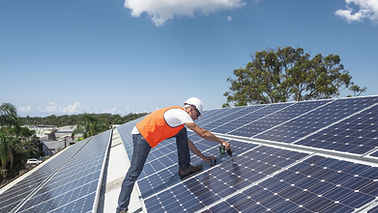
Many Massachusetts businesses achieve 4-6 year payback periods with these combined incentives!
California Solar Companies Must Navigate These Utility Requirements
Pacific Gas & Electric (PG&E)
-
Serves Northern and Central California including San Francisco Bay Area, Sacramento, Central Valley, and North Coast
-
NEM 3.0 net billing (export credits $0.05-0.08/kWh)
-
Time-of-use rates with expensive 4-9 PM peak hours
-
SGIP battery rebates available
-
Frequent PSPS events in wildfire zones
Southern California Edison (SCE)
-
Serves Los Angeles area, Orange County, Inland Empire, and parts of Ventura/San Bernardino counties
-
NEM 3.0 net billing structure
-
Time-of-use rates with 4-9 PM peak pricing
-
SGIP rebates for battery storage
-
PSPS events in mountain and foothill communities
San Diego Gas & Electric (SDG&E)
-
Serves San Diego County and southern Orange County
-
California's highest electricity rates ($0.40-0.60/kWh peak)
-
NEM 3.0 with very low export credits
-
Super-peak pricing makes batteries especially valuable
-
SGIP battery incentives available
Los Angeles Department of Water & Power (LADWP)
-
Serves City of Los Angeles
-
Still offers traditional net metering (not NEM 3.0) with monthly rollover
-
More favorable economics than IOU customers
-
Solar-friendly policies
Municipal Utilities & Co-ops
California has 40+ municipal utilities and co-ops including:
-
Sacramento Municipal Utility District (SMUD)
-
Anaheim Public Utilities
-
Pasadena Water & Power
-
Imperial Irrigation District (IID)
-
Many others
Municipal utilities often have different net metering policies than the big three IOUs. Some still offer traditional net metering, while others have implemented their own versions of NEM 3.0. We navigate each utility's specific requirements.
Understanding NEM 3.0
California's Net Energy Metering 3.0 (implemented April 2023) fundamentally changed solar economics:
Old NEM 2.0 (grandfathered systems):
-
Export credits at full retail rates ($0.30-0.50/kWh)
-
Simple economics favoring large systems
-
Minimal need for batteries
New NEM 3.0 (systems after April 2023):
-
Export credits at wholesale rates ($0.05-0.08/kWh)
-
Batteries essential for maximizing savings
-
Smaller, optimized systems often better than oversized systems
-
Self-consumption is key
Why NEM 3.0 Changed Everything: Under NEM 2.0, you could oversize your solar system and export excess power to the grid for full retail credit—essentially using the grid as a free battery. Under NEM 3.0, exporting power to the grid returns only $0.05-0.08/kWh while using that power yourself saves $0.30-0.50/kWh. This 6-8X difference makes battery storage essential for optimal economics.
California Solar Company Serving Los Angeles, San Diego, San Francisco & Statewide

Los Angeles & Southern California:
-
Los Angeles, Long Beach, Anaheim, Santa Ana, Irvine, Glendale, Pasadena, Torrance, Orange, Huntington Beach
-
SCE, LADWP, and municipal utility territories
-
Highest solar adoption in state
-
Urban and suburban installations
San Diego Area:
-
San Diego, Chula Vista, Oceanside, Escondido, Carlsbad, El Cajon, Vista, San Marcos
-
SDG&E territory (highest rates in California)
-
Coastal considerations and inland heat
-
Strong solar + battery market
San Francisco Bay Area:
-
San Francisco, Oakland, San Jose, Fremont, Santa Clara, Sunnyvale, Hayward, Berkeley, Richmond, Daly City
-
PG&E territory
-
Urban, suburban, and tech industry commercial solar
-
Fog considerations in coastal areas
Sacramento & Central Valley:
-
Sacramento, Fresno, Bakersfield, Stockton, Modesto, Visalia, Salinas, Clovis
-
PG&E and SMUD territories
-
Excellent solar resources, hot summers
-
Agricultural and residential solar
Inland Empire:
-
Riverside, San Bernardino, Fontana, Moreno Valley, Corona, Temecula, Murrieta, Rancho Cucamonga
-
SCE territory
-
Extreme heat requires premium equipment
-
Strong residential and commercial markets
Central Coast:
-
Santa Barbara, San Luis Obispo, Santa Maria, Ventura, Oxnard, Santa Cruz, Monterey
-
PG&E and SCE territories
-
Coastal climate considerations
-
Mix of residential and agricultural solar
No matter where you're located in California, Girdler Solar connects you with trusted installers in your region, ensures you optimize for NEM 3.0 and your utility's rate structure, and helps you get the best solar + battery solution for your property.
California Solar Company FAQ: Your NEM 3.0 Questions Answered
Is solar still worth it in California under NEM 3.0? Yes, but only with proper system design including battery storage. NEM 3.0 changed the economics by reducing export credits from $0.30-0.50/kWh to $0.05-0.08/kWh, making it crucial to consume solar power directly rather than exporting to the grid. A properly sized solar + battery system under NEM 3.0 delivers 8-12 year payback periods and $40,000-$80,000 in lifetime savings—still excellent returns. The key is working with an advisor who understands NEM 3.0 optimization rather than installers still designing systems for the old net metering rules. SDG&E customers with the highest rates see the fastest payback, while PG&E and SCE customers still achieve strong ROI with batteries. How much battery storage do I need under NEM 3.0? Most California homes benefit from 10-20 kWh of battery capacity—typically one Tesla Powerwall 3 (13.5 kWh) or equivalent. The optimal battery size depends on: Your evening electricity usage (4-9 PM when rates are highest) Whether you need backup power during PSPS events Your daily solar production Your utility's time-of-use rate structure A typical California home using 30-40 kWh daily benefits most from 13.5 kWh battery storage, allowing you to store midday solar production and use it during expensive evening hours instead of exporting it for minimal credit. Larger homes or those in frequent PSPS zones may need 20-27 kWh (two Powerwalls). We analyze your specific usage patterns and recommend optimal battery capacity. What happens during Public Safety Power Shutoffs (PSPS)? Standard grid-tied solar systems (without batteries) shut down during PSPS events for safety—your panels won't provide power even during daytime. Solar + battery systems with backup capability keep your home powered during PSPS shutoffs, typically for 1-3 days depending on battery size and usage. If you're in a high fire-risk area with frequent PSPS events, battery backup isn't a luxury—it's essential. We design systems with enough battery capacity to keep critical loads running (refrigerator, lights, internet, medical equipment, AC) through typical 1-2 day PSPS events. Will solar panels increase my California property value? Yes. Studies show California solar homes sell for 3-4% more than comparable non-solar homes, and homes with solar + battery storage command even higher premiums. California's Solar Rights Act ensures solar installations don't increase your property tax assessment, so you get the value boost without higher taxes. In California's competitive real estate market, solar is a major selling point—especially with NEM 2.0 grandfathered systems that have more favorable economics than new NEM 3.0 systems. Buyers increasingly expect solar in California homes, and properties with battery backup are particularly attractive in PSPS-prone areas. Can I get grandfathered into NEM 2.0? No. NEM 2.0 ended on April 14, 2023. All new solar applications submitted after that date fall under NEM 3.0 rules. However, homes that installed solar under NEM 2.0 remain grandfathered for 20 years from their interconnection date, maintaining full retail rate export credits. This is why NEM 2.0 grandfathered homes command premium prices—they have significantly better economics than new NEM 3.0 systems. While you can't get NEM 2.0 anymore, properly designed NEM 3.0 systems with battery storage still deliver excellent financial returns. What's the SGIP program and how much can I save? California's Self-Generation Incentive Program (SGIP) provides rebates for battery storage installations. Rebate amounts vary based on: General market: $200-250/kWh of battery capacity Equity budget (low-income, disadvantaged communities): $850-1,000/kWh Equity resilience (income-qualified + PSPS zone): $850-1,000/kWh Example: A 13.5 kWh Tesla Powerwall 3 in the general market receives a $2,700-3,375 SGIP rebate. Income-qualified customers in PSPS zones can receive $11,500+ in SGIP rebates for the same battery. SGIP funds are limited and decline as funds are depleted, so applying sooner secures higher rebates. We handle your entire SGIP application and ensure you receive maximum available incentives. Do solar panels work well in California's heat? Yes, though extreme heat slightly reduces panel efficiency. Solar panels are rated at 77°F, and output decreases roughly 0.3-0.5% for every degree above that. On 110°F days, panels might produce 10-15% less than their rated capacity. However, California's exceptional sunshine more than compensates—annual production still exceeds cloudy states by 25-40%. We recommend panels with low temperature coefficients (like SunPower, REC, Q CELLS) that maintain better performance in California heat. Despite the heat factor, California remains one of the absolute best states for solar production and financial returns. Can I install solar if I'm in a wildfire zone? Yes, but installations in High Fire Hazard Severity Zones require additional fire-hardening measures including: Rapid shutdown devices on all panels Fire-resistant materials and setbacks Module-level power electronics (MLPE) Ground clearance around equipment These requirements add modest cost but are mandatory for safety and permitting. Many California solar customers in fire zones specifically want battery backup to maintain power during PSPS events. We design systems that meet all fire-hardening requirements while providing reliable backup power. What happens if I move before my solar loan is paid off? You have several options: Pay off the loan at closing and roll the cost into your home sale price (most common) Transfer the loan to the buyer if they qualify and agree Continue making payments from your new home while the solar system adds value to the sale Most California buyers view solar as a major benefit, especially NEM 2.0 grandfathered systems. Your solar system typically increases home value by more than the remaining loan balance. If you have NEM 2.0, buyers may pay a premium for your grandfathered status. How do I choose between different battery options? The three most popular battery options in California are: Tesla Powerwall 3 (13.5 kWh): Integrated inverter (no separate solar inverter needed) 11.5 kW continuous power output Industry-leading warranty and software $14,000-16,000 installed Enphase IQ Battery (3.3 kWh or 10 kWh models): Modular design (stack multiple units) Integrates seamlessly with Enphase microinverters Scalable capacity $12,000-15,000 for 10 kWh LG Chem RESU (9.8-16 kWh): Proven reliability Compatible with most inverters Good warranty $11,000-14,000 for 9.8 kWh We help you compare options based on your solar system design, backup power needs, and budget. All qualify for the 30% federal tax credit and SGIP rebates.